
Decorating in the UK's rainiest city
Glasgow averages more than 170 days of rain a year, the most of any UK city, and that shapes decorating here. Any exterior work needs dry-weather windows and moisture-tolerant systems, so it is planned around the forecast rather than the calendar. Indoors, the same damp climate means condensation staining on walls and ceilings is a recurring preparation issue: stains are sealed before painting so they do not bleed back through.
The River Clyde and its tributary the Kelvin run through the city, and ongoing drainage investment aims to cut flood and sewage-overflow risk. For a decorating job, the practical point is simpler: rooms that have suffered damp need the cause sorted before the finish goes on.
Tenements, common closes and tall rooms
Glasgow is known for its tenements, and their red and blond sandstone is one of the most recognisable features of the city. Inside, tenement flats tend to have high ceilings, ornate cornicing, timber sash windows, panelled doors and long hallways, so access and careful cutting-in along high ceiling lines matter. Shared closes are often redecorated on a rota arranged by a factor, and Louise is happy to quote for that kind of communal work as well as private flats.
Rental refreshes and void turnarounds
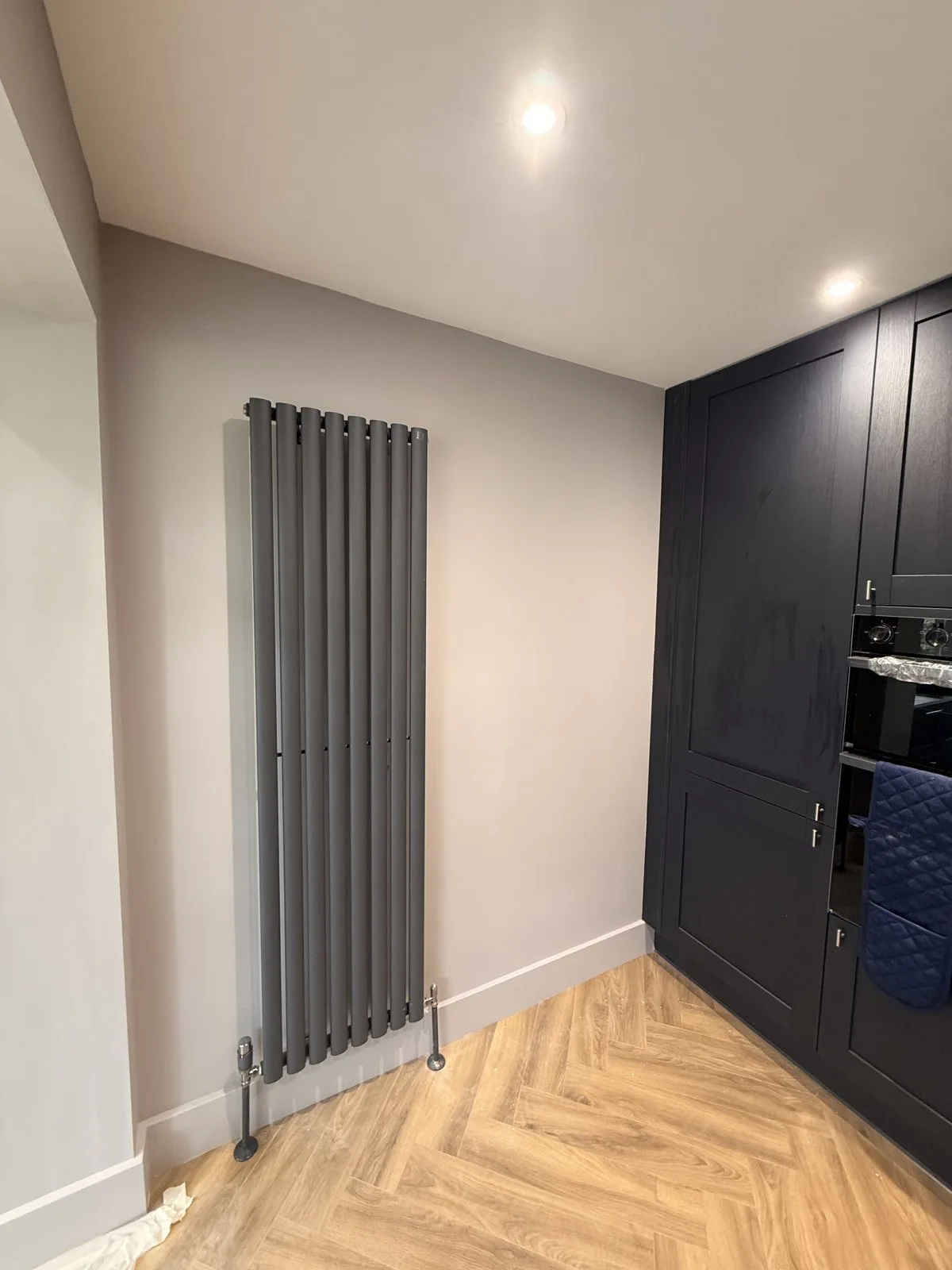
The West End's large student population means a steady cycle of rental refreshes between tenancies, where a flat needs to be turned around quickly and left clean and durable. Much of north Glasgow is social housing with many high-rises, so housing-association contracts and void turnarounds are another part of the local picture. Whatever the setting, the scope is the same: walls, ceilings, skirting, doors, frames, window boards and banisters, in finishes chosen for how each room is used. For tall spaces, see the hallway, stairs and landing page.
From George Square to the West End
Work is considered across the city, from the Merchant City, George Square, Buchanan Street, Sauchiehall Street and Argyle Street in the centre, out through the West End, Hillhead, Hyndland and Partick, and down to Shawlands, Battlefield, Govanhill and Mount Florida on the Southside. Landmarks like Kelvingrove Park, the University of Glasgow, the Botanic Gardens and Great Western Road sit in the middle of that patch. Send your postcode and Louise will confirm coverage.
Preparation before any paint goes on
Most of the finish is decided before the first coat. Holes and cracks are filled and sanded flush, loose or flaking paint is scraped back, and stains are sealed so they do not bleed through. Rooms papered in woodchip or several layers of old paper are stripped first, because painting over them rarely looks right for long.
Sometimes stripping reveals walls that are too rough or patched to paint well. In that case Louise can skim them, giving a smooth new surface that is then sealed and painted in the same job. If you are mainly after plaster work, the Glasgow skimming page explains that side in more detail.
Wallpaper, feature walls and panelling
Not every room wants plain paint. A patterned paper behind a bed, a bold colour on a chimney breast or half-height panelling in a hallway can change how a space feels. Louise hangs feature walls and full rooms with matched patterns and tight seams, and fits decorative panelling that is filled, caulked and painted so it looks built in rather than stuck on.
How a job runs
When you book LJAY's, the person who visits, prices the job and picks up the brush is Louise herself, with more than ten years in the trade. It starts with a conversation and, where needed, a visit to see the rooms, followed by a clear quote. On the day, floors and furniture are covered, the work is carried out in a sensible order, and the space is left tidy at the end of each day. Work is done Monday to Friday, with some weekend availability depending on the project.
Get a quote
Send your Glasgow postcode, the rooms involved and a few photos, and Louise will confirm whether she can take the job on.