
Planning context before choosing the repair
City of Edinburgh Council is the planning authority. The city's conservation areas include New Town, Marchmont Meadows and Bruntsfield, Stockbridge Colonies and Leith. A green belt designated in 1957 surrounds Edinburgh, but that designation alone does not describe the condition of an internal wall. For a listed property or changes affecting protected details, clarify the requirements before work begins.
A plastering enquiry should identify the damaged surface and the features beside it. Repairing a patch, replacing failed material and changing an original ceiling are different proposals. Knowing what must remain helps determine the scope without assuming every period room needs a full new finish.
New Town ceilings: retain the edge detail
Georgian New Town interiors can combine high ceilings, cornicing and lath-and-plaster construction. The plaster's support and condition matter as much as its visible cracks. Explain if an area sounds hollow or appears loose; a thin finishing coat is not a structural repair. Around retained cornicing, the boundary of the work should be agreed so a smoother ceiling does not obscure the moulded detail.
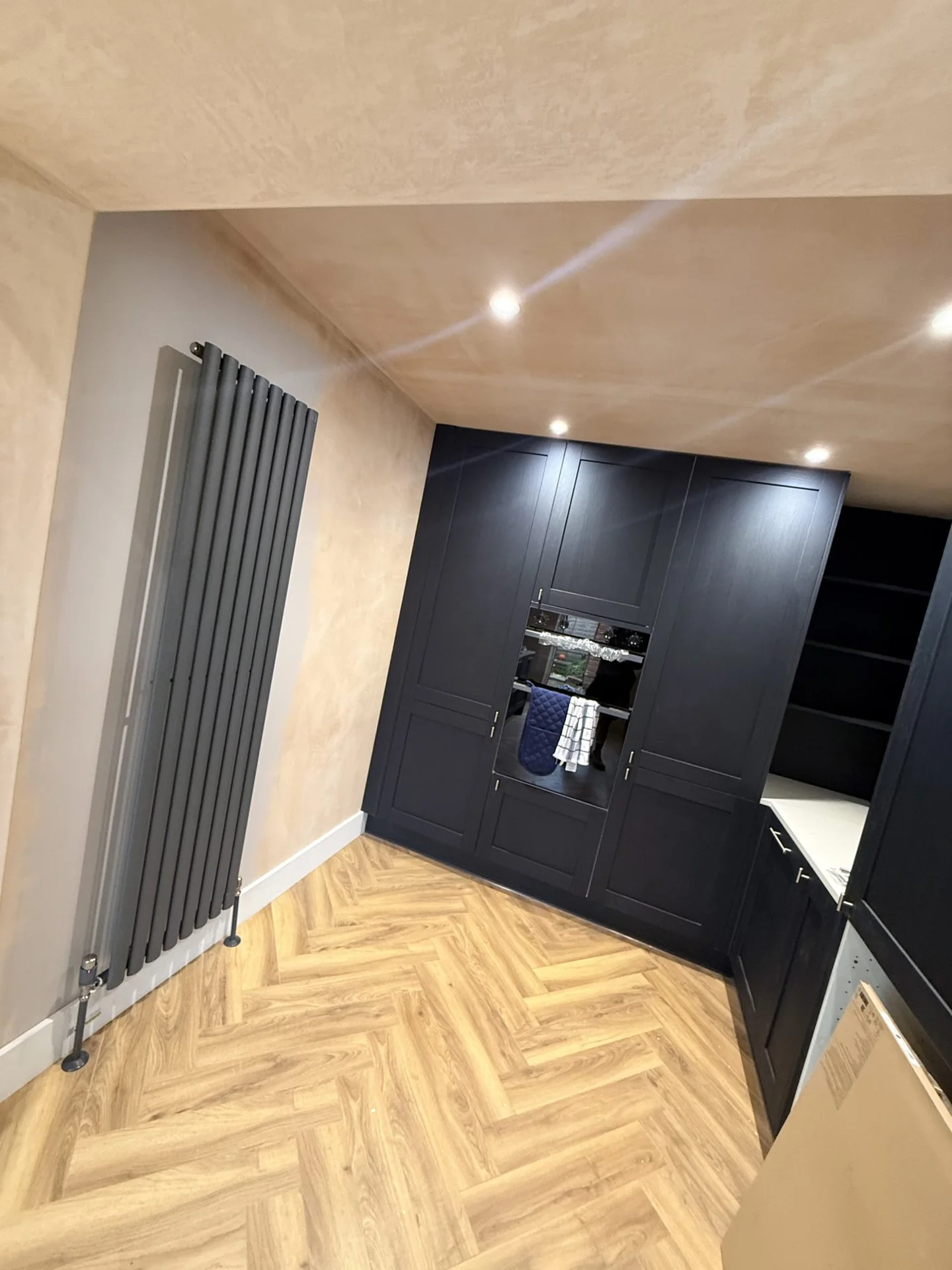
Different rooms across the neighbourhoods
Marchmont, Bruntsfield, Stockbridge and Leith are useful references when arranging travel, but no neighbourhood name substitutes for photographs. Include the wall after any wallpaper stripping if possible, together with close-ups of damaged corners and a view showing the complete ceiling. This helps separate isolated repairs from surfaces needing a more continuous finish.
Coastal air and the next decorating stage
Haar and easterly coastal fog near Leith and Portobello bring damp air that can extend plaster drying. Agree the finishing sequence without treating an elapsed number of days as proof that the surface is ready. Gentle ventilation and suitable room conditions help; direct intense heat should not be used to force the timetable. Any active moisture cause needs attention before the repaired wall is covered.
Patch repair or a full skim
Not every wall needs a complete skim. A single crack or a small damaged area can often be cut out and repaired so it blends in once painted. When the damage is spread across the wall, or there are so many old repairs that patching would just add more, a full skim is the better value because it gives one consistent surface.
Louise will tell you which applies after seeing the wall, in person or from clear photos.
Skimming as part of a full redecoration
Many customers combine plastering with decorating. Once the skim has dried, Louise seals it with a mist coat and carries on with walls, ceilings and woodwork, so the whole room is finished by the same person who prepared it. The Edinburgh painter and decorator page covers that side of the work.
What to send for a quote
To get an accurate answer quickly, send photos of each wall or ceiling in good daylight, approximate room measurements including ceiling height, and your postcode. Note any damp marks or areas that sound hollow when tapped. Travel is considered for larger jobs and is built into the quote.
Get a quote
Include your Edinburgh postcode, room sizes and daylight photos of the walls you want skimmed.